
Aging in Place Remodeling: How to Design a Home for Long-Term Comfort
For many homeowners, the goal isn’t to move — it’s to stay in the home they love for as long as possible. Aging in place means creating a home that supports changing needs over time while maintaining comfort, independence and quality of life.
Whether you're planning for retirement, helping aging parents or simply thinking ahead, thoughtful remodeling can make it easier to remain safely and comfortably in your home for years to come.
What Does Aging in Place Mean?
Aging in place refers to the ability to live independently in your own home regardless of age or mobility changes. Rather than moving to assisted living or downsizing, many homeowners choose to modify their existing homes to better support their future needs.
These changes don't have to make your home feel institutional. In fact, many aging-in-place features are attractive, functional and valuable for people of all ages.
The Best Remodeling Projects for Aging in Place
Main-Level Living
One of the most important considerations is minimizing stairs. If possible, having a bedroom, bathroom, laundry room and kitchen on the main level allows homeowners to remain comfortable even if mobility changes later in life.
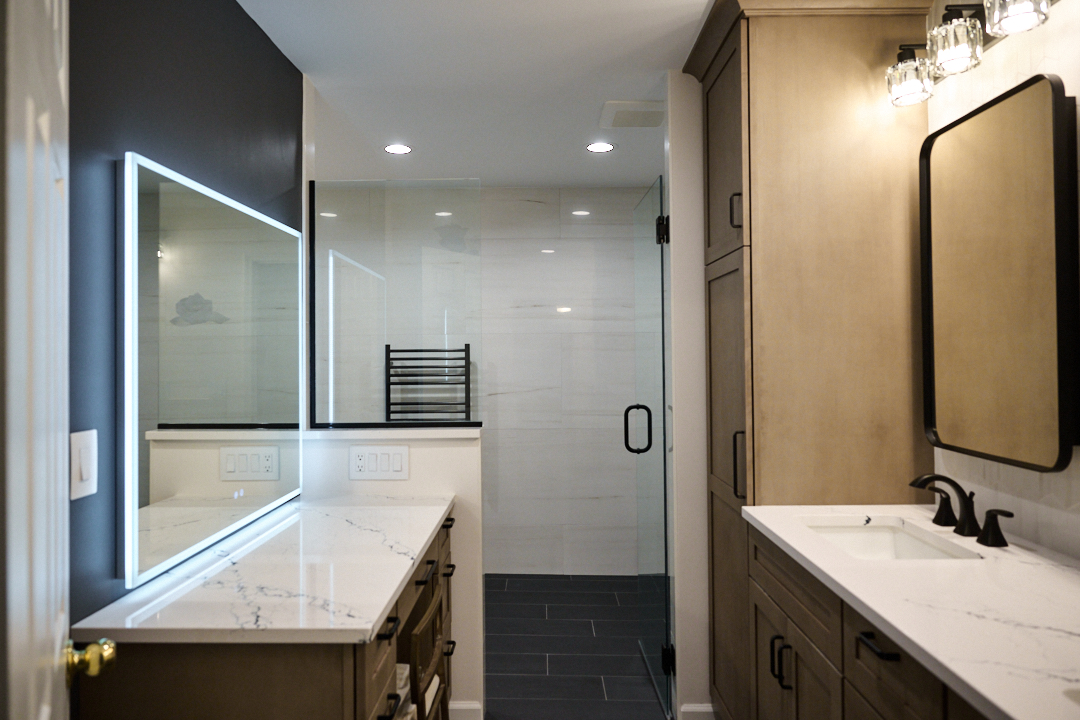
Bathroom Remodeling
Bathrooms are one of the most common places for falls and injuries. A bathroom remodel can improve both safety and convenience.
Popular aging-in-place features include:
- Curbless walk-in showers
- Built-in shower benches
- Handheld showerheads
- Non-slip flooring
- Wider doorways
- Comfort-height toilets
- Grab bars designed to blend with the overall design
- Improved lighting
Many homeowners choose to incorporate these features before they are needed so the space remains beautiful and functional for decades.
Kitchen Remodeling
A well-designed kitchen can make everyday tasks easier and safer.
Features to consider include:
- Wider walkways
- Pull-out shelves and drawers
- Easy-to-reach storage
- Lever-style faucets
- Improved task lighting
- Microwave drawers
- Induction cooktops for added safety
- Varied countertop heights for seated use
Improved Accessibility
Small changes throughout the home can have a big impact.
These may include:
- Wider hallways and doorways
- Zero-step entries
- Lever door handles
- Better lighting
- Slip-resistant flooring
- Smart home technology
- Rocker-style light switches
Planning for accessibility early can help avoid costly modifications later.
Whole-Home Remodeling
For many homeowners, aging in place involves more than one room. A whole-home remodel allows you to create a cohesive plan that supports long-term comfort while maintaining the character and beauty of your home.
Features might include:
- First-floor primary suites
- Elevator or lift options
- Improved circulation between rooms
- Additional storage
- Flexible spaces for caregivers or visiting family members
- Outdoor living spaces that are easy to access
Start Planning Before You Need It
The best aging-in-place remodels happen before they become necessary. Planning ahead gives homeowners more options and allows improvements to be integrated seamlessly into the home's design.
Aging in place isn't about preparing for limitations. It's about creating a home that continues to support your lifestyle, independence and peace of mind for years to come.
At Aptitude Design & Build, we help homeowners create thoughtful, beautiful spaces designed to evolve with their needs — so they can continue enjoying the homes they love for decades to come.


.jpeg)