How Much Should You Budget for a Home Remodel in St. Louis?
One of the first questions homeowners ask when considering a remodel is also one of the hardest to answer:
How much should we budget?
The answer depends on much more than the size of your home. The spaces you're remodeling, the extent of the changes, the age and condition of the house, material selections, and the level of customization can all have a significant impact on the final investment.
Before choosing countertops or deciding whether to remove a wall, it helps to understand what different remodeling budgets can realistically accomplish.
Here's how St. Louis homeowners can begin thinking about a remodeling budget.
Start With What You Want to Accomplish
Instead of beginning with a long wish list of finishes and features, start by asking what isn't working about your home.
Maybe your kitchen is too small for the way your family lives. Perhaps you need another bathroom, better storage, a finished basement, or a more open connection between your kitchen and living spaces.
Your goals determine where your budget will have the greatest impact.
There's a considerable difference between refreshing an existing room and changing how an entire section of the house functions. Once you understand the problem you're trying to solve, it becomes much easier to establish a realistic investment range.
What Can Different Remodeling Budgets Accomplish?
Every project is different, but thinking in broad investment ranges can help you understand what's possible.
Around $25,000–$50,000
At this level, homeowners are generally looking at a smaller or more focused project rather than a major transformation.
Depending on the space and selections, that might include:
- Cosmetic updates to an existing room
- Flooring, painting and lighting improvements
- Smaller custom cabinetry or built-in projects
- A limited bathroom renovation
- Updating finishes while keeping the existing layout largely intact
The more plumbing, electrical and structural elements remain in their current locations, the further a budget can generally go.
Around $50,000–$100,000
This range opens up considerably more possibilities.
A homeowner might undertake:
- A kitchen remodel
- A substantial bathroom renovation
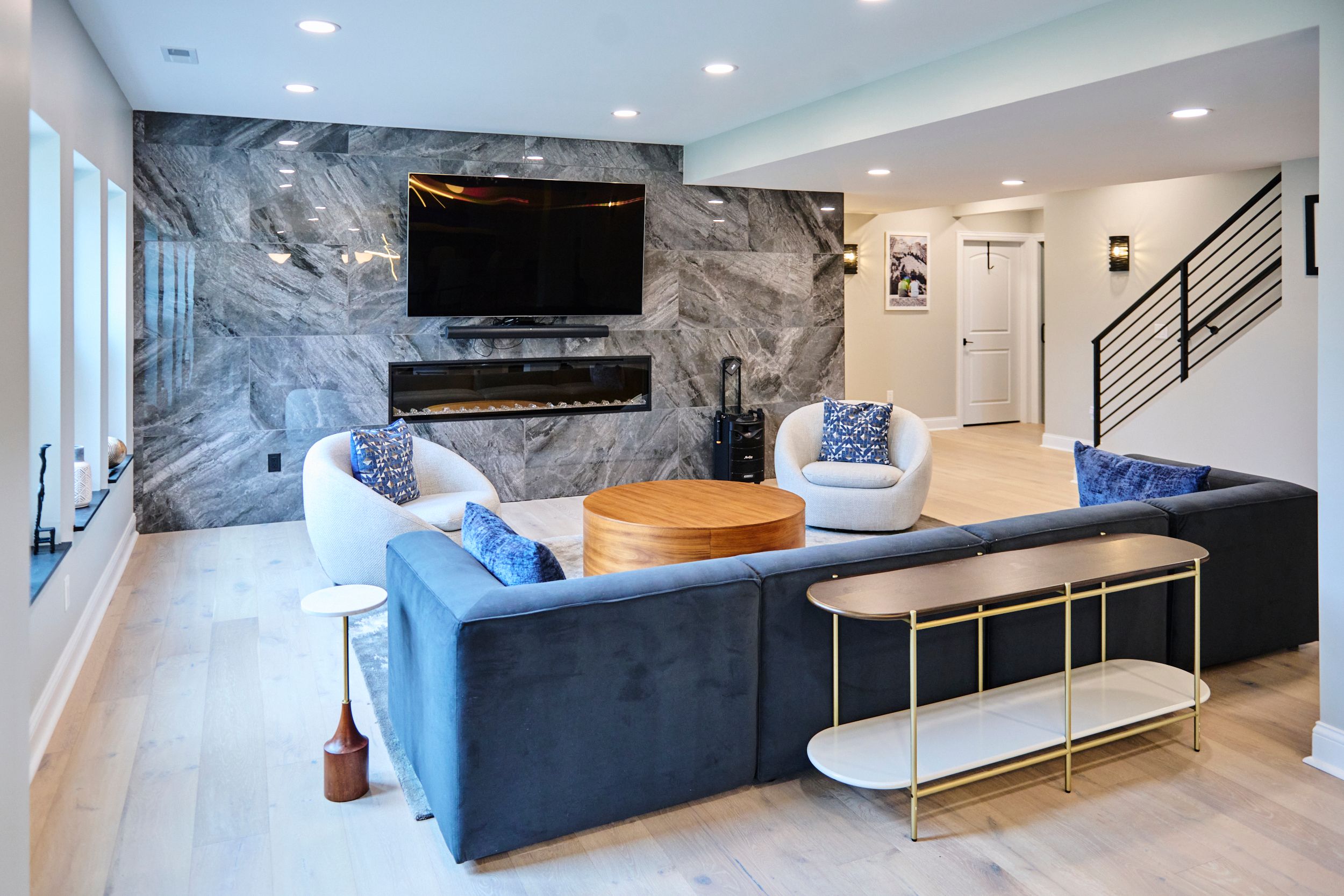
- A basic basement finishing project
- Custom cabinetry and storage improvements
- Improvements to several interconnected spaces
The exact scope depends heavily on material selections and whether the project involves structural changes.
For example, a kitchen that retains its existing footprint is very different from one that requires removing walls, relocating plumbing and electrical systems, and installing extensive custom cabinetry.
Around $100,000–$250,000
At this investment level, homeowners can begin thinking beyond a single room.
Projects may include:
- A larger custom kitchen renovation
- A kitchen combined with adjacent living or dining spaces
- Multiple bathroom renovations
- A more extensively finished basement
- Significant layout changes
- Structural modifications
- Custom cabinetry and built-ins
- Upgrades across several areas of the home
This is often where remodeling becomes less about updating individual rooms and more about improving how multiple spaces work together.
$250,000+
Larger-scale and whole-home remodeling projects frequently begin in this territory.
Depending on the home and project scope, this level of investment may include:
- A comprehensive whole-home remodel
- Kitchen and multiple bathroom renovations
- Major floor plan changes
- Structural modifications
- Extensive custom cabinetry
- Electrical, plumbing or HVAC upgrades
- Premium materials and finishes
- Architectural and custom design features
For comprehensive whole-home renovations, investment can reach $500,000 or more, particularly when extensive structural work, high-end finishes or older-home updates are involved.
Why Square-Foot Pricing Doesn't Tell the Whole Story
Homeowners sometimes try to estimate a remodel by multiplying the square footage of their home by an average construction cost.
Unfortunately, remodeling doesn't always work that way.
Two projects of exactly the same size can have dramatically different costs.
A 500-square-foot basement with an open family room is relatively straightforward. The same amount of space containing a bathroom, wet bar, custom cabinetry, specialty lighting and entertainment features involves significantly more labor, materials and trades.
Kitchens and bathrooms are also considerably more construction-intensive than bedrooms and living rooms because they involve cabinetry, plumbing, electrical work, fixtures, appliances and specialized finishes.
Scope is often a better predictor of remodeling cost than square footage alone.
Don't Forget the Things You Can't See
Some of the most important parts of a remodeling budget aren't the things you'll photograph when the project is finished.
This is particularly relevant in St. Louis, where many homeowners are renovating older houses.
Once work begins, a project may require attention to:
- Electrical systems
- Plumbing
- HVAC
- Structural framing
- Water damage
- Insulation
- Code requirements
- Previous renovations that weren't completed correctly
Not every older home will uncover major surprises, but existing conditions should be considered when establishing the budget.
How Much Should You Set Aside for Unexpected Costs?
It's wise to leave some flexibility in your remodeling budget rather than allocating every available dollar to the initial scope and finish selections.
A contingency of approximately 10–20% can provide room for unexpected conditions or changes during construction.
Older homes or projects involving significant demolition may warrant greater flexibility because more of the existing structure will be exposed.
The goal isn't to assume something will go wrong. It's to create a financial plan that can accommodate the realities of remodeling without forcing difficult decisions midway through the project.
Where Should You Spend—and Where Can You Save?
A good remodeling budget isn't necessarily about choosing the least expensive option. It's about spending intentionally.
If you cook every day, cabinetry, layout and durable countertops might deserve a larger portion of your kitchen budget.
If you're finishing a basement primarily for children to play and watch movies, you may decide premium finishes aren't as important.
Think about which improvements will affect your everyday experience of the home.
Areas often worth prioritizing include:
- Functional layout
- Quality cabinetry
- Durable, frequently used materials
- Good lighting
- Storage
- Skilled installation
Decorative elements and finishes can then be balanced around those priorities.
Your Wish List and Your Budget Need to Meet Early
One of the most frustrating ways to approach a remodel is to design the dream project first and discover later that it costs significantly more than expected.
Budget conversations should happen early.
That's one of the advantages of working with a design-build team. Design and construction aren't treated as completely separate processes.
As ideas develop, they can be evaluated against real-world construction considerations and budget expectations.
If the original wish list and budget don't align, decisions can be made before construction begins: adjust the scope, change selections, reconsider certain features, or potentially plan improvements in phases.
Should You Tell Your Remodeler Your Budget?
Yes.
Some homeowners hesitate to share a budget because they're concerned the project will simply expand to use whatever number they provide.
But a realistic investment range is an important design constraint.
Knowing the budget allows your remodeling team to recommend solutions that make sense for the project rather than spending time developing ideas that aren't financially realistic.
You don't need to know the exact amount down to the dollar. An honest range is enough to begin a productive conversation.
Think About Value Beyond Resale
It's natural to consider how a remodel will affect your home's value, but resale shouldn't be the only measure of whether an improvement is worthwhile.
A renovation may give you:
- A kitchen that finally works for your family
- Space to entertain comfortably
- Better storage and organization
- A home office
- A guest suite
- A bathroom that supports aging in place
- A finished basement your family uses every day
- The ability to remain in a neighborhood you love
Those improvements have value while you're living in the home—not just when you eventually sell it.
So, How Much Should You Budget for Your St. Louis Remodel?
Rather than starting with a generic number, start with three questions:
What problems do we want the remodel to solve?
What are our must-haves?
What are we realistically comfortable investing in the home?
From there, an experienced remodeling team can help determine whether the scope and investment align—and where adjustments can create the greatest impact.
The earlier those conversations happen, the more confidently you can move through design and construction.
Planning a Remodel in St. Louis?
At Aptitude Design & Build, we help St. Louis homeowners understand the relationship between scope, design and budget before construction begins.
Our design-build approach brings planning, design and construction together, allowing homeowners to make informed decisions throughout the remodeling process.
If you're considering a kitchen, bathroom, basement or whole-home remodel, contact Aptitude Design & Build to start a conversation about your home, your goals and what's possible within your investment range.