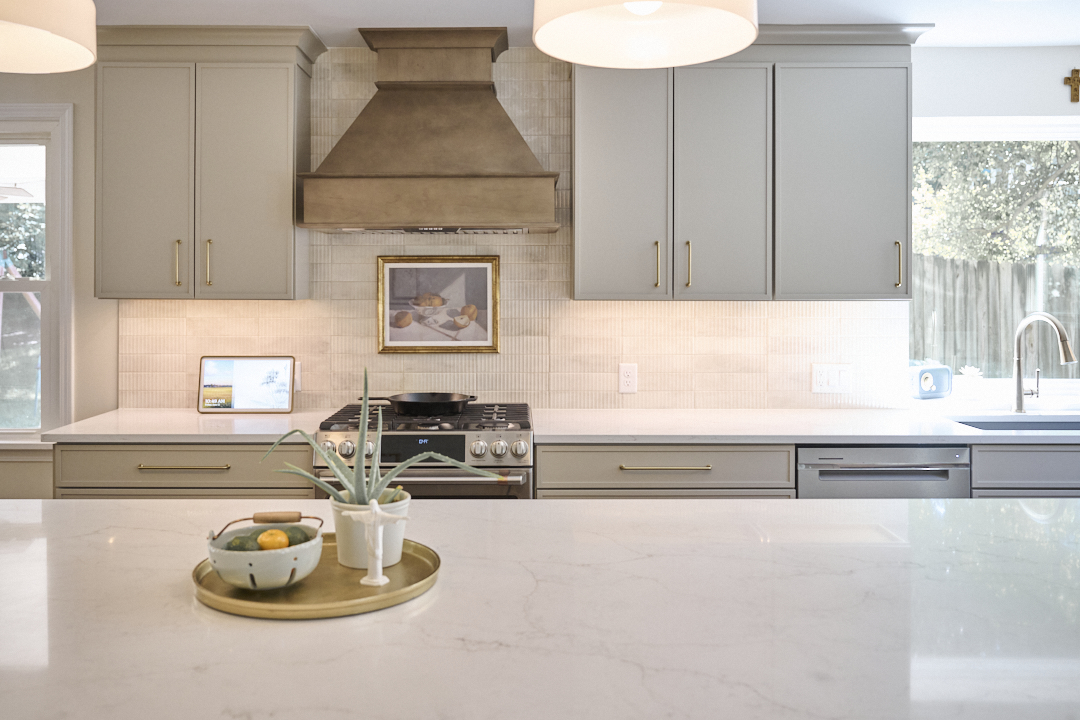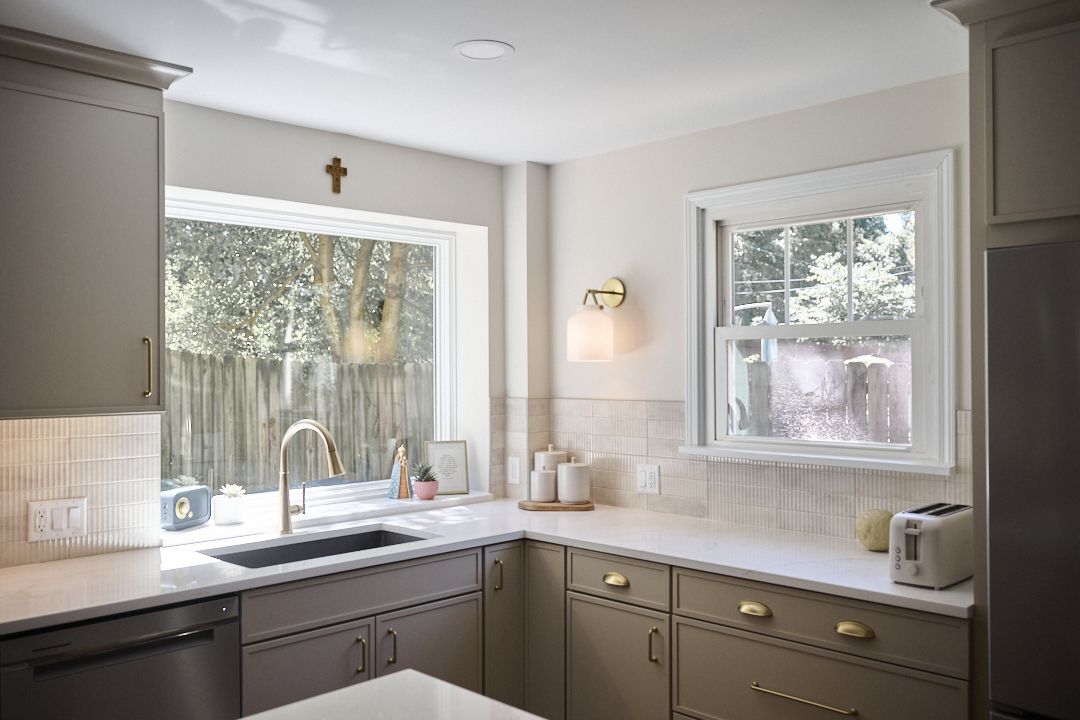
How Much Should You Spend on a Kitchen Remodel Based on Your Home’s Value?
If you’re planning a kitchen remodel, one of the hardest questions isn’t what cabinets to choose or which countertops you like. It’s deciding how much it makes sense to spend.
Should you invest $50,000? $100,000? $150,000 or more?
Your home’s value can be a useful starting point, but there isn’t a magic percentage that every homeowner should follow. The right kitchen remodeling budget depends on your home, your neighborhood, the scope of the project, how long you plan to stay, and what you want the remodel to accomplish.
Here’s how we recommend thinking about it.
What Percentage of Your Home’s Value Should You Spend on a Kitchen Remodel?
You may have heard rules suggesting that homeowners should spend a certain percentage of their home’s value on a kitchen remodel.
While percentages can provide a rough reference point, they shouldn’t determine your budget on their own.
Consider two homes worth $750,000. One may have a relatively functional kitchen that needs new cabinetry, countertops, flooring, and lighting. The other may have a kitchen that is too small for the house and requires walls to be moved, plumbing and electrical work, structural changes, and an entirely new layout.
The homes may have the same value, but the appropriate remodeling investment could be very different.
Instead of starting with a fixed percentage, consider three things together:
- The current value and overall quality of your home
- The scope of work required to create the kitchen you want
- How the investment fits with your long-term plans for the home
That gives you a much more realistic framework for establishing a budget.
How Much Should You Spend Remodeling a $500,000 Home?
For a home around $500,000, it’s especially important to balance the quality of the renovation with the overall value of the property.
That doesn’t mean choosing the cheapest finishes. Quality cabinetry, durable countertops, good lighting, functional storage, and a well-designed layout can all make a meaningful difference in how the kitchen looks and functions.
However, extremely high-end finishes and extensive customisation may be harder to justify financially unless you plan to stay in the home for a long time and are remodeling primarily for your own enjoyment.
The biggest question is often whether you can achieve what you need within the existing kitchen footprint or whether the project requires substantial structural changes.
What About a $750,000 to $1 Million Home?
As home values increase, homeowners often have more room to invest in the kitchen without the renovation feeling out of proportion with the rest of the property.
In this range, you may be considering features such as custom or semi-custom cabinetry, higher-quality appliances, stone countertops, larger islands, specialty storage, architectural lighting, or changes to the existing floor plan.
The surrounding home matters, too.
If the kitchen is being remodeled to a significantly higher standard than the rest of the house, you may not receive the same benefit as you would from a more cohesive renovation. On the other hand, if the home already has high-quality finishes and architectural details, an inexpensive kitchen renovation can feel out of place.
The goal is usually to create a kitchen that feels appropriate for the home as a whole.
Can You Spend Too Much on a Kitchen Remodel?
Yes, particularly if your primary goal is resale.
A kitchen remodel can make your home more appealing to future buyers, but spending more doesn’t automatically mean your home will increase in value by the same amount.
For example, replacing functional cabinetry with extremely expensive custom cabinetry or selecting luxury appliances far beyond what buyers typically expect in your neighborhood may be worthwhile to you, but that doesn’t necessarily mean you'll recover every additional dollar when you sell.
That doesn’t make those choices wrong.
If you expect to live in your home for another 10 or 20 years, the value you receive from a kitchen isn’t limited to resale. You’ll use the space every day.
That’s why we think it’s important to distinguish between resale value and lifestyle value when establishing your remodeling budget.
When Does It Make Sense to Spend More?
There are situations where a larger investment may make sense even if it represents a significant percentage of your home’s current value.
One is when the existing kitchen simply doesn’t work.
Maybe the kitchen is undersized, isolated from the rest of the house, short on storage, or poorly configured for the way your family lives. Solving those problems may require more than replacing finishes.
Moving walls, changing the layout, relocating plumbing, upgrading electrical systems, or addressing structural issues can increase the project cost, but those changes can also fundamentally improve how you use your home.
It may also make sense to invest more if you love your home and neighborhood and plan to stay for many years. In that situation, the question isn’t simply, “How much will I get back when I sell?”
It’s also, “What is having the right kitchen worth to us for the next 10 or 15 years?”
Where Should You Put Your Kitchen Remodeling Budget?
Once you’ve established an overall budget, deciding where to spend it is just as important.
We generally recommend prioritizing the things that are difficult or expensive to change later.
Layout and space planning: Getting the layout right can have a bigger impact on your everyday experience than almost any individual finish.
Cabinetry: Cabinets take up a large amount of visual space and are responsible for much of your kitchen’s storage and functionality.
Lighting: A thoughtful combination of task, ambient, and decorative lighting can dramatically change how a kitchen feels and functions.
Infrastructure: Plumbing, electrical, ventilation, and structural work aren't the most exciting parts of a remodel, but doing them properly matters.
Finishes such as hardware, paint colors, and some fixtures are much easier to update in the future.
Should You Remodel Your Kitchen Before Selling?
If you expect to sell soon, a major kitchen remodel requires a different calculation.
Rather than designing your ideal kitchen, you’re making an investment intended primarily to make the property more attractive to buyers.
In that situation, it may make more sense to address obvious problems and dated features without creating a highly personalised or unusually expensive kitchen.
If you're staying for years, you have much more reason to design around your own needs and preferences.
Home Value Is a Guide, Not Your Kitchen Remodeling Budget
So, how much should you spend on a kitchen remodel based on your home’s value?
There isn't one percentage that works for every homeowner.
Your home’s value can help you determine whether the level of investment is appropriate, but your budget should also reflect the scope of work, the quality of the home, your neighborhood, how long you intend to stay, and what you need the new kitchen to accomplish.
For some homeowners, a relatively straightforward renovation is the right investment. For others, solving the kitchen properly means changing the layout and investing significantly more.
The important thing is understanding those tradeoffs before construction begins.
At Aptitude Design & Build, we help St. Louis homeowners determine what’s possible within their homes and develop a remodeling plan that balances design, functionality, construction, and budget.
Planning a kitchen remodel in St. Louis? Contact Aptitude Design & Build to start a conversation about your home, goals, and project.
.jpeg)