What Makes a Bathroom Remodel Look Expensive? 10 Design Details That Make the Difference
A high-end bathroom isn’t necessarily the bathroom with the most expensive tile, fixtures, or vanity.
Often, what makes a bathroom look and feel luxurious is how well everything works together.
The proportions feel right. The lighting is intentional. Materials transition cleanly. Storage has been considered. And instead of competing for attention, the individual design choices create a cohesive space.
If you’re planning a bathroom remodel in St. Louis, here are 10 details that can make the biggest difference.
1. Start With a Well-Planned Layout
Before choosing tile or fixtures, get the layout right.
A beautiful bathroom can still feel awkward if there isn’t enough space around the vanity, the shower door interferes with another fixture, or the toilet becomes the first thing you see when you enter the room.
Good bathroom design considers how you’ll actually move through and use the space.
Sometimes the existing layout works well and there’s no reason to change it. In other bathrooms, moving a fixture or rethinking the configuration can dramatically improve both function and appearance.
The important thing is to make those decisions before getting caught up in finishes.
2. Choose Tile With the Entire Room in Mind
Tile has a major visual impact in a bathroom, but expensive tile alone doesn’t create an expensive-looking bathroom.
Scale, placement, pattern, grout, and transitions all matter.
A simple tile installed thoughtfully can look more sophisticated than an expensive tile used without considering the rest of the room.
Think about where tile begins and ends, how patterns align around corners and niches, and how the floor tile relates to the shower walls.
The goal is for the tile to feel intentional rather than simply applied to the available surfaces.
3. Pay Attention to the Shower Glass
Shower glass takes up a surprising amount of visual space.
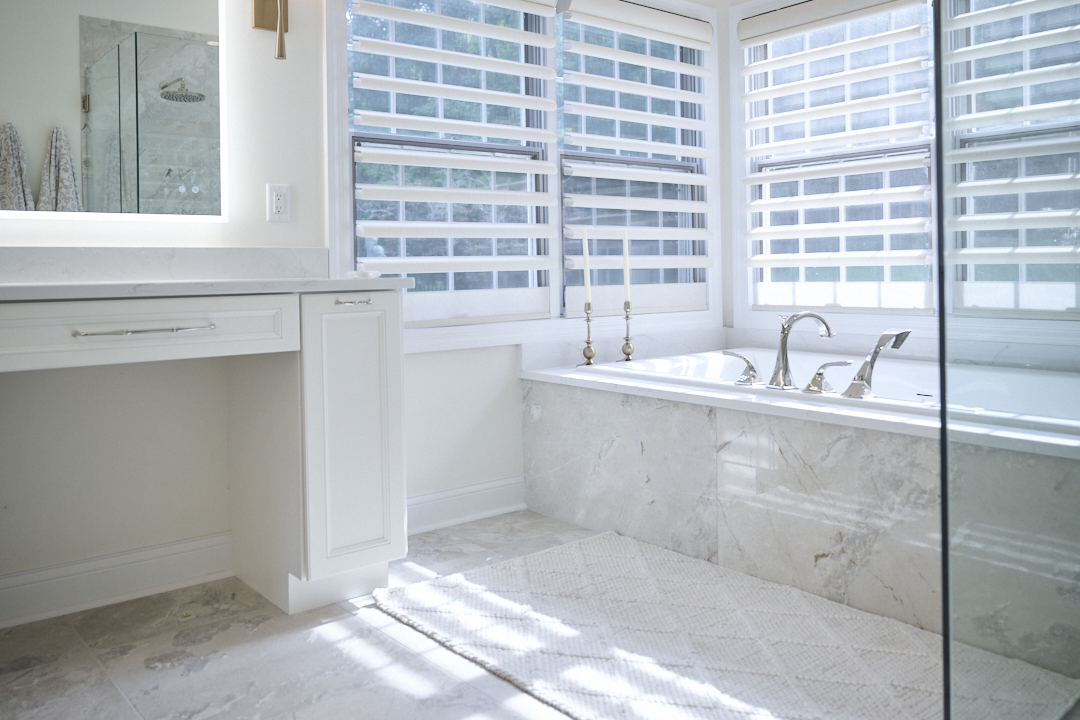
Heavy frames or poorly positioned hardware can interrupt sightlines and make a bathroom feel busier. Frameless or minimally framed glass can create a cleaner look and allow the tile and other materials to remain visible.
The dimensions matter, too.
A well-proportioned shower enclosure that aligns naturally with surrounding walls and finishes can make the entire bathroom feel more considered.
4. Use Lighting in Layers
One ceiling fixture usually isn’t enough to make a bathroom feel polished — or particularly pleasant to use.
A well-designed bathroom often combines several types of lighting.
Ambient lighting illuminates the overall room. Task lighting provides useful light around mirrors and vanities. Accent or decorative lighting can add warmth and visual interest.
Placement is particularly important around the mirror. Lighting directly overhead can create shadows on the face, while thoughtfully positioned vanity lighting provides more even illumination.
Natural light should also be considered wherever possible.
5. Make the Vanity Feel Proportional to the Space
The vanity is often one of the largest visual elements in a bathroom.
Too small, and it can look lost. Too large, and the room can feel cramped.
Whether you choose custom, semi-custom, or manufactured cabinetry, the vanity should feel like it belongs in the room.
Consider storage needs, countertop space, sink placement, drawer configuration, and how the vanity relates to mirrors and lighting above it.
A relatively simple vanity that fits the room beautifully can look more sophisticated than a much more expensive option with the wrong proportions.
6. Keep Plumbing Fixtures Cohesive
Your faucet, shower fixtures, tub filler, and other plumbing details don’t necessarily need to come from the exact same collection.
But they should feel related.
Mixing too many finishes, styles, or shapes can make a bathroom feel visually disconnected.
That doesn't mean everything has to match perfectly. Mixing metals can work beautifully when it’s intentional. The key is repetition and restraint.
Choose a small number of finishes and use them consistently throughout the space.
7. Don't Treat Storage as an Afterthought
One thing that quickly undermines a beautiful bathroom is clutter.
Toiletries covering the vanity, towels without a home, and shower products sitting on the floor can change how even a beautifully finished bathroom feels.
Think about storage during the design process.
That might include vanity drawers, recessed medicine cabinets, linen storage, shower niches, built-in cabinetry, or another solution specific to the way you use the room.
The best storage often isn't particularly noticeable. It simply allows the bathroom to function without everything being on display.
8. Pay Attention to the Small Transitions
Some of the details that make a bathroom feel high-end are the ones you barely notice.
Where does the tile stop?
How does the flooring transition at the doorway?
Does the vanity align with architectural elements in the room?
Are outlets, switches, vents, and controls thoughtfully positioned?
Do grout lines and tile edges terminate cleanly?
These details may seem minor individually, but together they have a major effect on how finished the room feels.
A good bathroom remodel isn't just about selecting beautiful materials. It's about figuring out how those materials meet.
9. Invest in the Things You Touch Every Day
If you’re deciding where to spend more of your bathroom remodeling budget, think about what you'll interact with most often.
Cabinet drawers that open and close smoothly. A shower that feels good to use. Faucets that operate well. Lighting that works when you're getting ready in the morning.
These aren't necessarily the most dramatic features in photographs, but they can have the biggest impact on your experience of the finished bathroom.
Luxury isn't only about appearance. It's also about how effortlessly a space functions.
10. Design the Bathroom for the House
Finally, don't design your bathroom in isolation.
A highly contemporary bathroom can feel strange inside a traditional home if there’s nothing connecting the two. Likewise, trying to reproduce a historic bathroom exactly may not make sense for the way you live today.
This is particularly relevant when remodeling older St. Louis homes.
You can create a bathroom that feels fresh and current while still respecting the architecture and character of the house.
Materials, cabinetry, trim, hardware, proportions, and architectural details can all help create that connection.
What Should You Splurge on in a Bathroom Remodel?
If your budget requires some prioritization, spend first on the things that are difficult or expensive to change later.
That generally means getting the layout right, addressing plumbing and electrical needs, properly waterproofing wet areas, installing quality cabinetry, and choosing durable materials.
Decorative items are often easier to change.
Mirrors, paint, hardware, accessories, and even some lighting can be updated relatively easily in the future.
The bones of the bathroom can't.
You Don't Need the Most Expensive Materials to Create a Beautiful Bathroom
A bathroom that feels high-end isn't simply a collection of expensive products.
It's the result of hundreds of small decisions working together.
Good proportions, thoughtful lighting, clean material transitions, functional storage, quality installation, and a design that makes sense for the home can have more impact than choosing the most expensive option in every category.
That's also one of the advantages of approaching a remodel through design-build. Design decisions, construction requirements, and budget can be considered together rather than independently.
At Aptitude Design & Build, we help St. Louis homeowners create bathrooms that are thoughtfully designed, beautifully built, and tailored to the way they actually live.
Considering a bathroom remodel in St. Louis? Contact Aptitude Design & Build to start planning your project.
.jpeg)